Five original articles on what you put in your food every day. Sourced, cited, and written without the usual alarm.
Fresh from the Journal
Latest Articles
New writing on salt science, mineral nutrition, and the ecology of Sambhar Lake — published regularly.
From the Archive
Five Articles Worth Reading
No headlines written to alarm you. No tips you already know. Careful, sourced examinations of the thing most people add to food every day without questioning.
In 2018, a team of researchers at Incheon National University in South Korea tested 39 brands of commercially available sea salt from 21 countries across six continents. They were looking for microplastics. They found them in 36 of the 39 brands tested. Not trace amounts confined to a few outliers. A consistent, measurable, cross-continental presence of plastic particles in the thing people shake over their food every single day.
The study, published in Environmental Science & Technology Letters, identified polyethylene terephthalate (PET), polyethylene (PE), and polypropylene (PP) as the most common polymer types — the same plastics found in bottles, packaging, and synthetic fibres. The particle counts ranged from 1 to 10 particles per 100 grams of salt, with Asia-Pacific brands showing the highest concentrations. The finding made international headlines for approximately one week. Then the news cycle moved on. The salt on most kitchen shelves did not.
"The plastic particles do not evaporate with the water. They stay — in the salt, on the crystal, and eventually in your food."
Why This Is a Structural Problem, Not a Quality Control Failure
The contamination is not happening because of poor manufacturing standards or insufficient filtration. It is happening because of where the raw material comes from. Ocean salt is made from seawater. Seawater, as of the early 21st century, contains microplastics in every ocean basin on earth — fragments of synthetic textile fibres, broken-down packaging, and polyethylene microbeads, most of which are invisible to the naked eye and small enough to pass through industrial salt-washing processes.
When seawater is evaporated in solar pans or industrial evaporators to produce salt, the water leaves. The plastic does not. It remains in the crystalline matrix of the finished product. Better washing helps marginally. Better filtration helps marginally. But none of it addresses the root cause: the ocean is contaminated, and ocean salt cannot be separated from what the ocean contains.
Himalayan Salt: Better, But Not Exempt
Himalayan pink salt — mined from the Khewra mine in Pakistan's Punjab province — is somewhat better positioned. The deposit formed 250 million years ago, before industrial plastic existed. There are no microplastics baked into the geological record. But mining introduces its own contamination vectors: heavy metals from surrounding rock strata, equipment lubricants, dust from drilling, and the fundamental unpredictability of what sits geologically adjacent to a salt seam that has been in the ground for a quarter of a billion years. Several independent analyses have found elevated levels of arsenic and lead in certain Himalayan salt batches, though within limits considered acceptable by regulatory bodies.
Why Sambhar Lake Is Structurally Different
Sambhar Lake sits in the Nagaur-Ajmer district of Rajasthan, approximately 80 kilometres west of Jaipur. It is fed by five rivers — the Mendha, Rupangarh, Khari, Khandela, and Mantha — and by ancient underground mineral springs. It has no connection, geological or hydrological, to any ocean. It has no industrial activity on its immediate banks. It is a Ramsar Convention wetland — meaning its ecology is formally recognised and safeguarded under an international treaty signed by India in 1981.
The salt that forms here forms in water that has never been within reach of the plastic waste stream that circulates through every ocean current on earth. Zero detectable microplastics is not a marketing claim added after the fact. It is a direct consequence of the lake's geography and its distance from the ocean. The contamination mechanism that affects sea salt simply does not exist here.
Source: Kim, J.S. et al. "Worldwide Occurrence of Microplastics in Commercial Salts from Different Countries." Environmental Science & Technology Letters, 2018. · Sharma, S. et al. Heavy metals in Himalayan pink salt. PLOS ONE, 2018.
The body maintains blood pH within an extraordinarily narrow band: 7.35 to 7.45. Below 7.35 is clinical acidosis — a medical emergency that requires immediate intervention. Above 7.45 is alkalosis, equally dangerous. Your body runs feedback loops involving the lungs, kidneys, and blood buffer systems continuously, every moment, to stay within this range. It will sacrifice almost anything else to do so.
This is the correct starting point for understanding why the phrase "alkaline diet" is complicated. Your blood pH will not change because of what you eat. The homeostatic machinery is too aggressive and too fast. If anyone tells you otherwise, they are wrong, and you should distrust everything else they are selling you about nutrition.
What Dietary Acid Load Actually Means
But here is what does change: the work your body has to do to maintain that pH. This is called net acid excretion (NAE), sometimes referred to as potential renal acid load (PRAL), and it is a real and measurable variable. When you eat a diet high in acid-producing foods — red meat, dairy, refined carbohydrates, processed salt — your kidneys must excrete more acid, and your lungs must adjust CO² levels more actively, to keep blood pH stable. This ongoing metabolic housekeeping is not free. Over years and decades, it creates measurable physiological consequences.
Research published in the Journal of Bone and Mineral Research and in Nephrology Dialysis Transplantation has linked chronically high dietary acid load to reduced bone density (the body buffers excess acid partly by releasing calcium carbonate from bones), reduced kidney function, and markers of metabolic inflammation. None of this is dramatic on a day-to-day basis. It is the kind of thing that shows up, if it shows up at all, across years. Which is exactly why the standard of what you put in your food daily matters.
"It is not a cure. It is a small, daily reduction in the buffering work your body was already doing quietly — work it has to do whether you help it or not."
How Sambhar Lake Salt Affects the Equation
Refined table salt has a pH of approximately 7 — neutral. It adds no acid load and no alkalinity. It is, in this sense, nutritionally inert: just sodium and chloride. Himalayan salt reaches 7.3 to 7.5 — slightly alkaline, marginally better. Puresol Natural Alkaline Salt from Sambhar Lake exceeds pH 9. This is not because anything was added. It is a consequence of the lake's geology.
Sambhar sits in an ancient sedimentary basin. Mineral-rich groundwater rises through alkaline soil by capillary action over centuries. As it evaporates, calcium, magnesium, potassium, sulphates, and bicarbonates concentrate and alkalise the brine. The salt that crystallises carries that alkalinity within its lattice structure — not as a coating or additive, but as a fundamental property of how it formed.
Using Puresol reduces the acid contribution of the salt in your food. Combined with its natural mineral content, it supports the kidneys by reducing the buffering demand placed on them daily. It does not make a dramatic physiological difference in a single meal. Used consistently, over months and years, in place of a salt that adds to the acid load rather than reducing it, the cumulative difference is real.
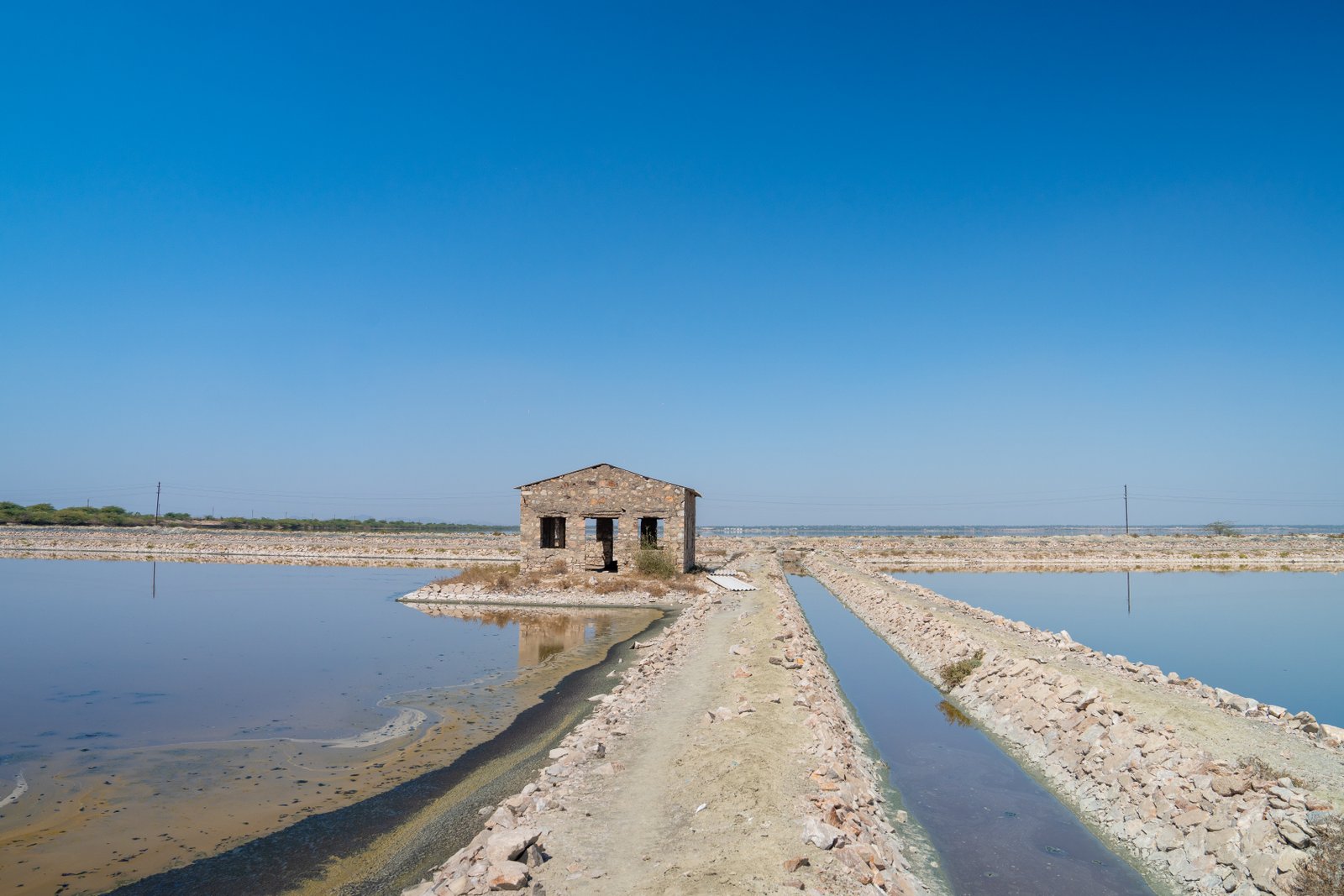
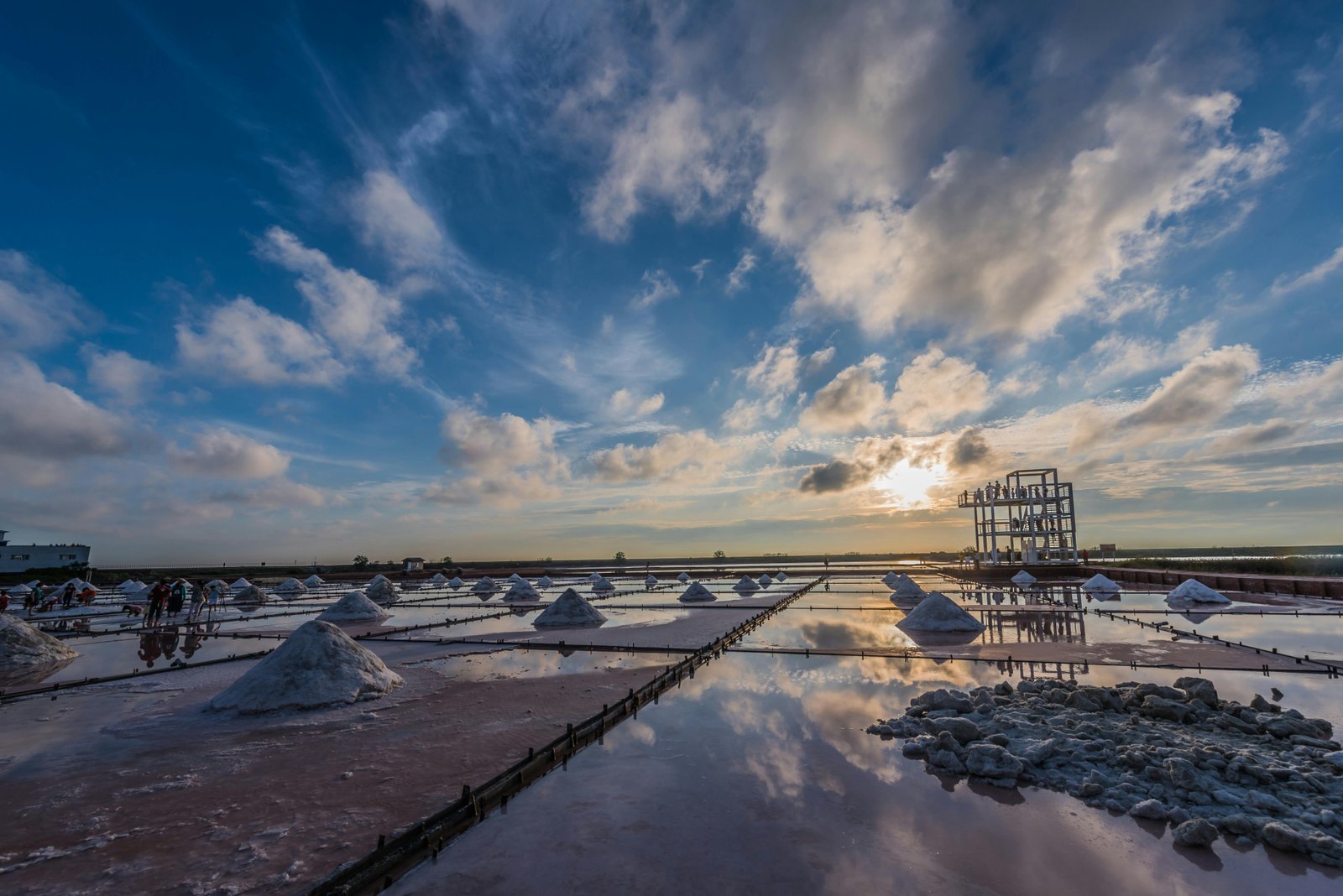
The salt pans stretch to the horizon. The process here has not changed in a thousand years.
Ayurveda
Lavanam: The Lost Art of Mineral Healing
Six Words for Salt
Sanskrit has six distinct words for salt. The one that concerns us here is Lavanam — the general term for mineral salt, from the root meaning "that which dissolves." In Ayurveda, the 5,000-year-old Indian system of medicine, Lavanam is not a condiment or a flavour agent. It is one of the six essential tastes — Shadrasa — required for complete nutrition and physiological balance. Its absence from a meal was considered a nutritional deficiency in the same category as the absence of protein or fat.
The Charaka Samhita — one of the two foundational texts of Ayurvedic medicine, compiled around 400–200 BCE but drawing on a much older oral tradition — dedicates an entire chapter to the classification and therapeutic use of salt. It describes at least seven varieties and ranks them by their properties. Sea salt (Samudra Lavana) is described as heavy, laxative in large quantities, and mildly heating. Rock salt (Saindhava, from the Sindh region) is considered superior — lighter, more easily digested, more alkaline, beneficial for eyesight and cardiac function. Inland mineral salts, including what the text calls Sauvarchala, are described as the most therapeutic category: digestive, gently laxative in appropriate doses, and beneficial for long-term systemic balance.
Vedic physicians prescribed inland mineral salt over sea salt 5,000 years before modern nutrition science arrived at the same conclusion through ICP-MS spectrometry.
What the Charaka Samhita Observed
Sambhar Lake salt appears explicitly in Ayurvedic pharmacopoeia. The lake sits in the geographic and geological context that Vedic physicians were describing: an inland mineral basin in the rain shadow of the Aravalli Hills, fed by mineral-rich subterranean springs, producing the kind of alkaline, trace-mineral-dense brine that is categorically distinct from ocean salt.
Ayurvedic physicians did not have pH meters. They did not have ICP-MS spectrometers. What they had was centuries of careful clinical observation. They observed that patients given inland mineral salt recovered differently from those given sea salt. Digestion improved. Skin conditions cleared. Energy levels returned more consistently. The Sushruta Samhita, the companion surgical text, notes the role of specific mineral salts in wound healing and tissue regeneration — properties we now understand as the consequence of zinc, manganese, and selenium availability.
In the language available to them — the language of doshas, elemental balance, and energetic properties — they described what we now measure as mineral replenishment, alkalinity, and the absence of heavy metal contaminants. The vocabulary was different. The phenomenon was identical.
How Industrial Salt Ended the Tradition
The collapse of mineral salt tradition was not dramatic. It did not happen in a single event or policy decision. It happened gradually through the 19th and 20th centuries, as the industrial production of refined sodium chloride made processed salt so cheap and so uniformly available that the older tradition of sourcing quality mineral salt became economically irrelevant. When salt costs almost nothing, the incentive to pay more for a better version disappears — even when the knowledge of why the better version exists is documented, as it was in ancient texts, in extraordinary detail.
The knowledge did not disappear. It was simply not transmitted commercially, because there was no longer a market to support it. What Puresol represents — in one specific sense — is a reconnection to what was already known and already documented. The lake is the same lake. The mineral springs are the same springs. The process is the same sun-curing process. The difference is that we can now measure, in molecular detail, exactly what the Charaka Samhita was observing through centuries of patient clinical practice.
The brine stains everything — hands, feet, cloth. The minerals leave a mark.
Nutrition
54 Minerals: What Each One Is Actually Doing
Why the Number Matters
"54 minerals" is a number that appears on the Puresol label. Like most numbers on labels, it risks becoming meaningless through repetition. This article exists to prevent that.
The mineral content of Sambhar Lake salt has been independently analysed by accredited laboratories using ICP-MS (inductively coupled plasma mass spectrometry) — the gold standard technique for trace element detection at the parts-per-billion level. The results confirm the presence of 54 distinct mineral and trace element species beyond sodium and chloride. Below is not the complete list. Below are the ten that matter most to human physiology, with specific functions and the clinical significance of their deficiency.
"Table salt gives you one thing: sodium chloride, with synthetic iodine added back in because refining stripped it out. Everything else was removed. Nothing was removed here."
The Ten That Do the Most Work
Mineral
Primary Role
Why Deficiency Matters
Magnesium
Co-factor in 300+ enzymatic reactions; ATP synthesis
Estimated 70% of adults in industrialised countries do not meet the recommended daily intake. Implicated in fatigue, sleep disruption, muscle cramping, insulin resistance, and cardiovascular risk.
Counteracts the blood-pressure-raising effect of sodium directly. The sodium-to-potassium ratio matters more than sodium intake alone for cardiovascular health. Most processed diets are severely potassium-deficient.
Calcium
Bone mineralisation; muscle contraction; nerve signal transmission
Calcium from food-matrix sources (naturally occurring in complex mineral form) is absorbed more efficiently than from isolated supplements. Supports skeletal density across decades, not just during growth phases.
Natural Iodine
Thyroid hormone synthesis (T3 and T4); metabolic rate regulation
Iodine in Puresol is naturally present, contributed by Dunaliella salina algae — not synthetically added. The WHO estimates 2 billion people globally have inadequate iodine intake. Natural iodine from an organic matrix is better retained by thyroid tissue than the potassium iodate used in fortified salt.
Zinc
Immune response; wound repair; DNA synthesis; testosterone production
Over 2 billion people are zinc-deficient globally, mostly through inadequate dietary intake. Even marginal deficiency impairs immune function, slows wound healing, and disrupts hormonal balance. Zinc from natural mineral sources is more bioavailable than from oxide supplements.
Iron
Haemoglobin formation; oxygen transport; mitochondrial function
Present in non-haem form at trace concentrations that contribute to daily requirements without the toxicity risk of excess supplementation. Iron deficiency remains the most prevalent nutritional deficiency worldwide, affecting 30% of the global population.
Manganese
Activation of superoxide dismutase (SOD); bone formation; carbohydrate metabolism
SOD is the body's primary endogenous antioxidant enzyme — manganese is required for its mitochondrial form. Deficiency is rare but sub-optimal intake is associated with reduced antioxidant capacity and joint degeneration.
Chromium
Potentiates insulin action; glucose uptake; carbohydrate and lipid metabolism
Consistently depleted in processed diets. Sub-optimal chromium is associated with impaired glucose tolerance and elevated Type 2 diabetes risk. Chromium picolinate supplements are widely sold; chromium in natural food-matrix form is more effectively retained.
Selenium
Thyroid hormone conversion (T4 → T3); antioxidant selenoproteins; DNA repair
Essential for the enzyme that converts inactive T4 into the active T3 thyroid hormone. Also required for production of glutathione peroxidase, one of the key antioxidant defences against lipid peroxidation. Deficiency is linked to thyroid dysfunction and elevated cancer risk in epidemiological studies.
Boron
Bone calcium retention; steroid hormone metabolism; brain function
Under-researched but increasingly recognised as important. Supports oestrogen and testosterone metabolism, improves calcium and magnesium retention in bone, and appears to influence cognitive function. Absent from refined salt; present in mineral-intact sources.
Why the Full Spectrum Outperforms Isolated Supplements
The remaining 44 minerals — lithium, rubidium, strontium, vanadium, molybdenum, cobalt, nickel, fluoride, and others — exist in trace quantities that are difficult to assign isolated functions to in controlled trials. But the body does not run on isolated compounds. It runs on the interaction between all of them simultaneously, in the ratios and forms that occur naturally in mineral-rich food sources. The argument for mineral-intact salt is not that any single trace element performs a miracle. It is that the full spectrum, in the proportions shaped by 4,000 years of Sambhar Lake's geology and the biology of its living brine, is structurally closer to what human physiology evolved to process than 99.9% pure sodium chloride.
Puresol is sun-dried for nine to twelve months through the Suryatapa process. This patience is not aesthetic tradition. It is the reason the mineral matrix stays intact. Industrial salt dried at 200°C or higher loses the trace elements that make the difference. Slow natural evaporation under open sky preserves what the lake's chemistry took millennia to create.
Super 54+ Salt: The Science Behind the Golden Grain
Most Salt Is Just Sodium Chloride
Even Himalayan pink salt — the current dominant reference point in premium salt marketing — is 95 to 98% sodium chloride. The pink colour comes from trace iron oxide. The mineral claims are often technically accurate but nutritionally overstated: the quantities of calcium, potassium, or magnesium in a typical serving of Himalayan salt are so small that they are clinically insignificant. The product is visually distinctive. Its functional advantage over regular table salt, in terms of nutrition per gram, is marginal.
Super 54+ Salt is different in kind, not just degree. Not because of what we add to it, but because of what grows in the brine where it forms.
The Organism Behind the Colour
Sambhar Lake, at its most concentrated — salinity exceeding 25%, pH reaching 9 to 11 — becomes uninhabitable for virtually every organism on earth. Fish cannot survive it. Most bacteria die within hours of exposure. But one organism does not merely survive in these conditions. It thrives in them specifically because they are extreme: Dunaliella salina, a single-celled halophilic microalgae found in only a handful of hypersaline environments worldwide, including the Dead Sea, the Great Salt Lake, and Sambhar.
Under normal salinity and light conditions, algae are green — the chlorophyll dominates. But Dunaliella salina responds to increasing salinity and intense UV radiation by upregulating beta-carotene production as a photoprotective pigment. The cells shift from green to deep golden-pink as beta-carotene concentration rises. This is the organism that gives Sambhar Lake its famous rose-pink colour during peak summer. It is also the organism whose beta-carotene concentrates directly into the brine and, subsequently, into the salt crystals forming within it.
Super 54+ Salt is the crystalline product of brine in which Dunaliella salina was actively living. The beta-carotene is not added. It is not extracted and then mixed in. It is present because the salt formed inside a living system where this molecule was being produced continuously by a thriving population of algae.
"A 2g serving delivers 60mg of natural beta-carotene. The WHO considers 3mg daily sufficient for adult health support. Super 54+ Salt provides 20 times that — in one pinch."
What Beta-Carotene Actually Does
Beta-carotene is the primary dietary precursor to Vitamin A (retinol). The body converts beta-carotene to retinol through a regulated enzymatic process — critically, it converts only what it needs. This self-regulating conversion mechanism prevents the toxicity risk associated with preformed Vitamin A (retinyl palmitate or retinyl acetate), the form used in most vitamin supplements and fortified foods, which can accumulate in the liver at high doses and cause hypervitaminosis A.
Vitamin A is essential for rhodopsin synthesis in retinal rod cells — the molecule responsible for low-light vision. Its deficiency is the leading cause of preventable blindness in children globally. It is also required for the differentiation of epithelial cells lining the lungs, gut, and skin — meaning it is central to barrier immunity, not just eye health. It supports T-lymphocyte development, embryonic organogenesis, and reproductive function. The WHO recommends 700 to 900 mcg RAE per day for adults. A 2g serving of Super 54+ Salt delivers 60mg of beta-carotene, representing approximately 30 to 35% of the recommended daily Pro-Vitamin A intake by conservative conversion estimates.
Natural vs. Synthetic: Why the Form Matters
The beta-carotene produced by Dunaliella salina is a mixture of 9-cis and all-trans isomers, along with the alpha-carotene and lutein that the organism synthesises simultaneously. Synthetic beta-carotene — used in most fortified foods and supplements — is predominantly the all-trans isomer only. Research published in the American Journal of Clinical Nutrition has demonstrated that the mixed isomer profile from natural algal sources has significantly higher bioavailability and superior antioxidant activity compared to the synthetic all-trans form in equivalent doses.
This is not a marginal difference. The food matrix matters. When beta-carotene arrives within a salt crystal that formed naturally in an algae-rich brine environment, it arrives with the cofactors — other carotenoids, fatty acid traces, membrane phospholipids — that improve its absorption and conversion efficiency. A synthetic beta-carotene capsule delivers the molecule in isolation. Dunaliella salina delivers it within an ecological context that human physiology can process more readily.
A Complete B-Vitamin Matrix
Beyond beta-carotene, Dunaliella salina synthesises a broad range of B-vitamins as metabolic byproducts of its own cellular processes. These become incorporated into the brine and, during sun-drying, into the salt crystal itself. None of the following are added post-production:
B1 — Thiamine
Carbohydrate metabolism; nerve function and signal conduction
B2 — Riboflavin
Cellular energy production; FAD and FMN enzyme co-factors
B3 — Niacin
Precursor to NAD+; involved in over 500 enzyme reactions
B6 — Pyridoxine
Amino acid metabolism; serotonin and dopamine synthesis
B9 — Folate
DNA synthesis and cell division; foetal neural tube development
B12 — Cobalamin
Neurological function; red blood cell formation; myelin synthesis
Vitamin C
Collagen synthesis; antioxidant; iron absorption enhancement
Vitamin E
Lipid-soluble antioxidant; cell membrane protection from oxidation
The 9-Month Sun-Drying Difference
Super 54+ Salt is sun-dried for nine to twelve months at Sambhar Lake through the Suryatapa process. This is not simply Puresol's adherence to tradition for aesthetic or marketing reasons. The slow, natural evaporation at ambient temperatures — never exceeding the temperature of open Rajasthan air — is what preserves the beta-carotene complex and the B-vitamin matrix that industrial processing would denature.
Industrial salt dryers operate at 180 to 250°C. Beta-carotene degrades significantly above 80°C, and begins to isomerise (converting from nutritionally active to less active forms) above 60°C. B-vitamins are heat-sensitive to varying degrees, with B1, B9, and B12 being particularly vulnerable to high-temperature processing. Salt dried slowly under the Rajasthan sun reaches daytime surface temperatures of 35 to 45°C — warm enough to evaporate water, cool enough to preserve the organic compounds within the crystal.
The patience of the process is the reason the nutritional claims are real. Any manufacturer could add synthetic beta-carotene to salt after the fact. The point of Super 54+ Salt is that nothing was added after the fact. The biology of Dunaliella salina and the physics of nine months of Rajasthan sun produced this, and the only thing we did was not interrupt it.
The Quietest Way to Fill a Nutritional Gap
Every person on earth uses salt. It is the most universal food ingredient in the history of human civilisation. The question is not whether to use it. The question is which one. Super 54+ Salt takes the daily act of seasoning food — an act that happens at every meal, for every person, regardless of income, diet, or health consciousness — and converts it into a consistent, low-dose delivery mechanism for natural beta-carotene, eight B-vitamins, and 54 trace minerals. It changes nothing about how you cook. Nothing about how much you use. Nothing about what your food tastes like.
Vitamin A deficiency affects an estimated 190 million children under the age of five globally, and is the leading cause of preventable childhood blindness. B12 deficiency affects an estimated 6% of adults under 60 and nearly 20% over 60 in developed countries, and significantly higher proportions in vegetarian and vegan populations. These are not small numbers, and they are not diseases that require dramatic intervention. They require consistent, daily access to nutrients that should never have been removed from food in the first place.
Sources: WHO Vitamin A Deficiency Report, 2009. · Ben-Amotz, A. et al. "Bioavailability of natural isomer mixture compared with synthetic all-trans beta-carotene." American Journal of Clinical Nutrition, 1996. · Ye, Z.W. et al. "Carotenoid and tocopherol composition in Dunaliella salina." Food Chemistry, 2008. · WHO/FAO Vitamin and Mineral Requirements in Human Nutrition, 2004.
Common Questions
Five Questions We Get Often
Is alkaline salt actually better than regular table salt?
Structurally, yes. Natural alkaline salt from an inland mineral lake retains trace minerals that industrial refining strips from table salt. Its alkalinity reduces dietary acid load over time. Blood pH does not change because of diet — your body regulates that tightly — but the kidney buffering work required to maintain it does change. Over years of daily use, reducing that chronic acid load has measurable metabolic consequences, including improved calcium retention in bone and reduced markers of renal stress.
What makes Sambhar Lake salt different from Himalayan pink salt?
Himalayan salt is mined from ancient seabed rock deposits coloured pink by iron oxide. It is essentially a mineral rock. Sambhar Lake salt is harvested from living brine — its colour comes from Dunaliella salina, a living halophilic microalgae producing beta-carotene in real time. The mineral profile is broader, the pH is significantly higher (9+ vs. 7.3–7.5), and because Sambhar Lake has no connection to any ocean, it has zero exposure to the microplastic contamination that saturates all major ocean currents.
How much Puresol should I use daily?
Use it exactly as you would use regular salt. The point is replacement, not supplementation — adding Puresol on top of your existing salt intake achieves nothing. Season food normally. One to two grams per meal is a reasonable range for most adults. The benefit accumulates through consistent daily use over months and years, not through increased quantity. If you are managing blood pressure or have been prescribed sodium restrictions by a physician, follow that guidance regardless of salt type.
What is Dunaliella salina and why is it significant?
Dunaliella salina is a single-celled halophilic microalgae that thrives only in hypersaline environments. In Sambhar Lake — where salinity can exceed 25% and pH reaches 9 to 11 — it produces beta-carotene as a photoprotective pigment against intense UV radiation. This beta-carotene concentrates directly into the brine and then into the salt crystals forming within it. Super 54+ Salt is salt formed inside living, algae-rich brine. The beta-carotene is not extracted or added: it is structurally present because the salt grew inside a living ecosystem.
Does natural alkaline salt lose potency over time?
Mineral content is locked within the crystalline lattice during the 9–12 month sun-drying process and remains stable for years in a cool, dry environment. The beta-carotene in Super 54+ Salt is more sensitive to light — an opaque container extends its potency. The B-vitamins are moderately stable under normal storage conditions but begin to degrade with prolonged exposure to high temperatures or direct sunlight. In practical terms: keep it sealed and away from heat, and it will remain nutritionally intact for the length of normal household use.
The Journal
New articles, when they are ready.
No weekly digests. No promotional emails disguised as content. When something worth reading is written, you will receive it. Nothing else.